Reflections from MuC 2025: Field Research in HCI
Challenges, Methods, and Future Directions
The MuC 2025 workshop examined the importance of field research in HCI and ways to enhance current methods. Topics such as recruitment, inclusivity, and ethics were discussed. In group sessions, participants explored strategies for community engagement, ways to deal with setbacks in research practice, and structural challenges such as funding and regulation.
See workshop details: MuC 2025 Workshop - Embedding HCI in the Real World
Presentations
No Field Without Access: Recruitment as a Core Component of HCI Field Studies
Jane-Sophie Effert, Franziska Günther- HCI research must address the growing complexity of sociotechnical systems through in-situ, qualitative field studies that go beyond traditional usability testing.
- Participant recruitment and field access are often undervalued, yet they are methodologically significant aspects of study design.
- Recruitment strategies should be treated as integral to research design, shaping participation, data quality, and inclusivity in HCI field studies.
Examining Real-World Use of Collaboration Tools through Body Tracking Sensors
Julian Fietkau- Affordable body tracking sensors enable semi-automated, long-term field studies of how people engage with interactive technologies.
- Deployments reveal both benefits and drawbacks of using body tracking data to quantitatively study interaction.
- A mixed-methods framework is proposed, integrating ethnographic approaches with sensor-based analysis to address technical and methodological challenges.
Human-Computer Interaction from the Lens of Learning Experience Evaluation - Discussing Field Study Methods from a Newly Founded University
Carina Ziegler, Andrea de Santiago Andrea, Isa Jahnke- HCI field research is applied to learning experience design at a new university where all courses are digitally enhanced and studied using usability and user experience methods.
- The focus is on understanding student interactions with digital tools, peers, instructors, and pedagogical content in blended course settings.
- Open questions remain about which HCI fieldwork methods are suitable—or whether new ones are needed—to effectively study and improve learning experience design.
Field-Based Research on Hybrid Work: Approaching more inclusive Research practices for broader Perspectives?
Henrik Sellmann, Niko Reiz, Jens Gerken, Frauke Mörike- Hybrid work combines virtual and physical collaboration, reducing physical barriers for people with disabilities while introducing challenges such as team asymmetries and exclusion.
- Inclusive HCI research, using ethnography and participatory design, can address these challenges by emphasizing trust-building and adaptability.
- Prioritizing observation of real-world practices over stated preferences enables technology design to better support the accessibility potential of hybrid work.
Too Immersive for the Field? Addressing Safety Risks in Extended Reality User Studies
Tanja Kojic, Sara Srebot, Maurizio Vergari, Mirta Moslavac, Maximilian Warsinke, Sebastian Möller, Lea Skorin-Kapov, Jan-Niklas Voigt-Antons- XR technologies are increasingly studied in real-world environments, offering richer user insights but also amplifying safety challenges such as physical risks, psychological distress, and accessibility concerns.
- In unsupervised or crowdsourced testing, safety decisions often fall to individual researchers, raising issues of responsibility and consistency.
- Practical strategies are needed to guide researchers in conducting XR field studies safely and inclusively across diverse environments.
Immersive Technology for Intangible Cultural Heritage: A Workshop with the Irula Community
Thekla Mayer, David Fuhry, Ceenu George- Immersive technologies like VR can play a role in supporting and preserving intangible cultural heritage such as language and cultural practices.
- A participatory workshop with the Irula community in Kerala explored opportunities and challenges in technology use, language attitudes, and design engagement.
- Findings highlight low-code development and design pathways for transferring intangible cultural artefacts into VR environments.
Improving Patient Experience During Radiotherapy: Insights from a Field Study at Charité
Thekla Mayer, Iva Karabatic, Franziska Hausmann, Ceenu George- Patient experience is a crucial measure of care quality, particularly in demanding treatments such as radiotherapy.
- A field study at Charité’s Campus Virchow used HCI methods to examine patients’ needs, frustrations, and coping strategies.
- Findings identify opportunities to improve information access, hospital navigation, and patient-staff interactions.
Interactive Session Summary
Introduction
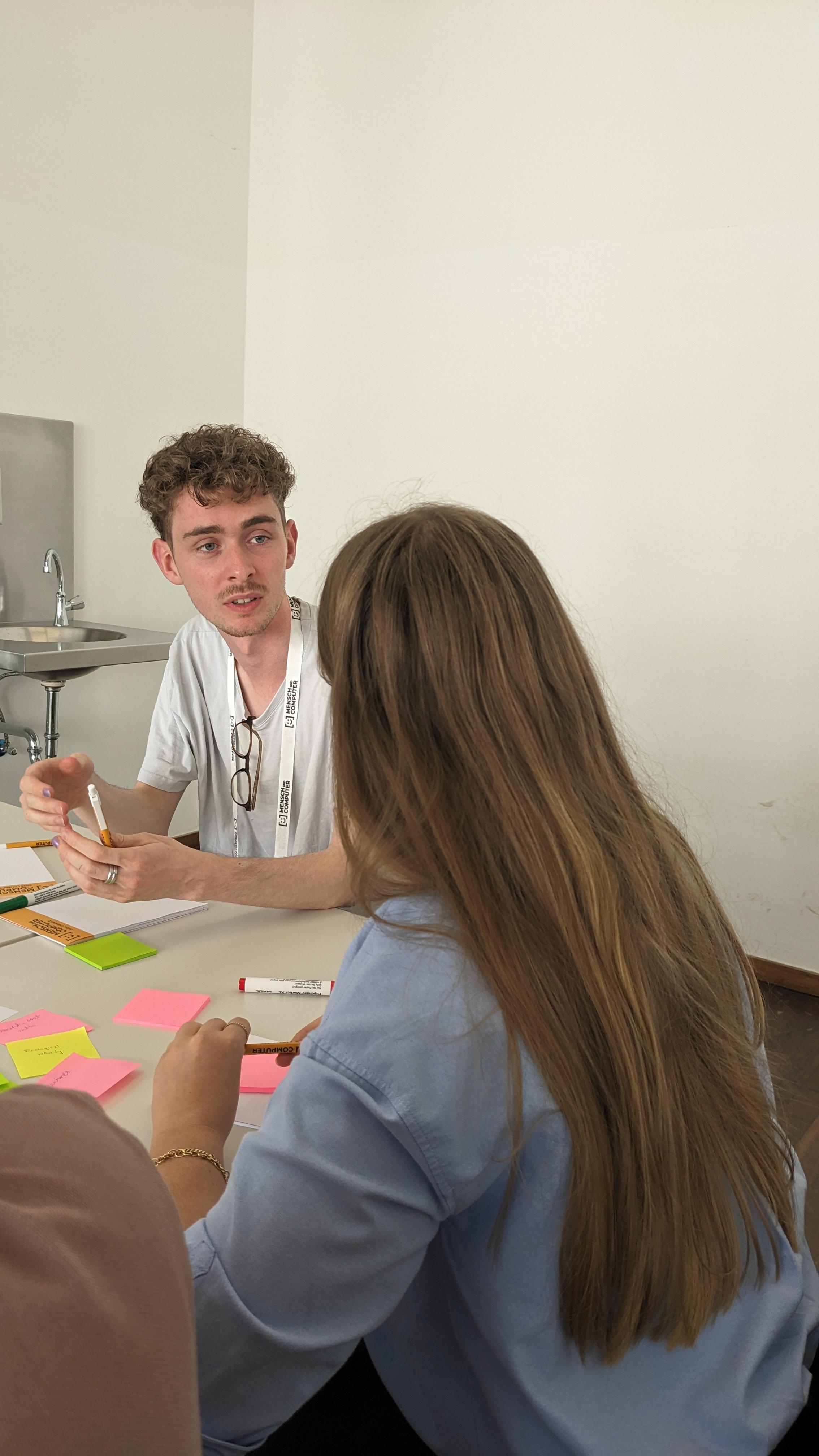
After the lunch break, we transitioned into the collaborative part of the workshop. In three rounds of group work, participants focused on different aspects of field research in HCI. Together, we identified pressing questions, discussed challenges, and developed initial solution approaches as well as ideas for future collaboration.
Recruitment
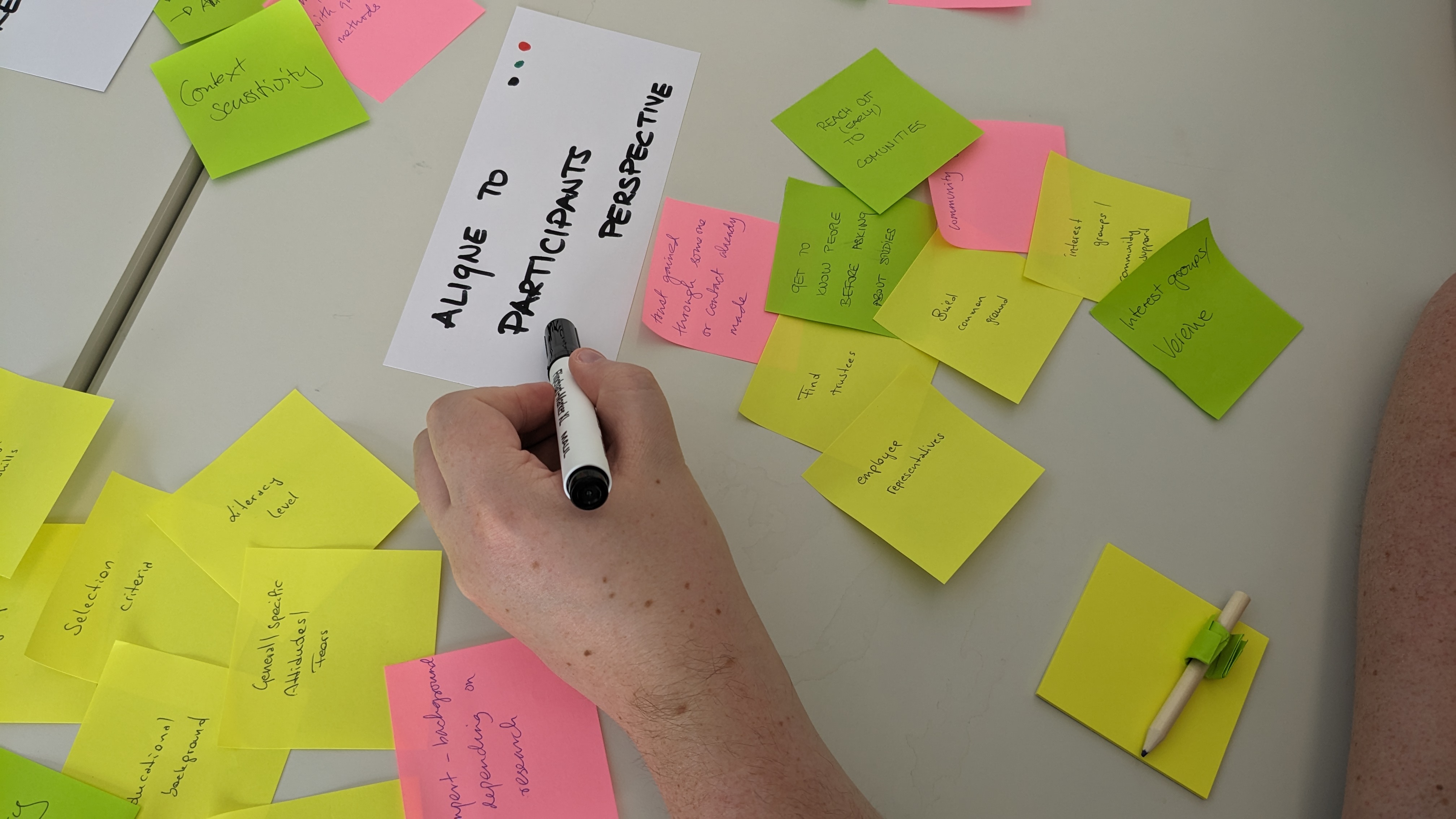
Discussions centered on research synergies, aligning with participants’ perspectives, and building common ground before entering the field. A strong emphasis was placed on interdisciplinarity and community access. Another key topic was the question of appropriate benefits for participants: How can incentives be meaningful and respectful to the communities involved? Early ideas included: educating and employing participants, drawing on existing theories (e.g., Maslow’s hierarchy of needs) to decide on suitable benefits, and recognizing that what researchers see as “normal” in their everyday work may feel surprising and even exciting for participants - “make them amazed!”
Methods of Field Research
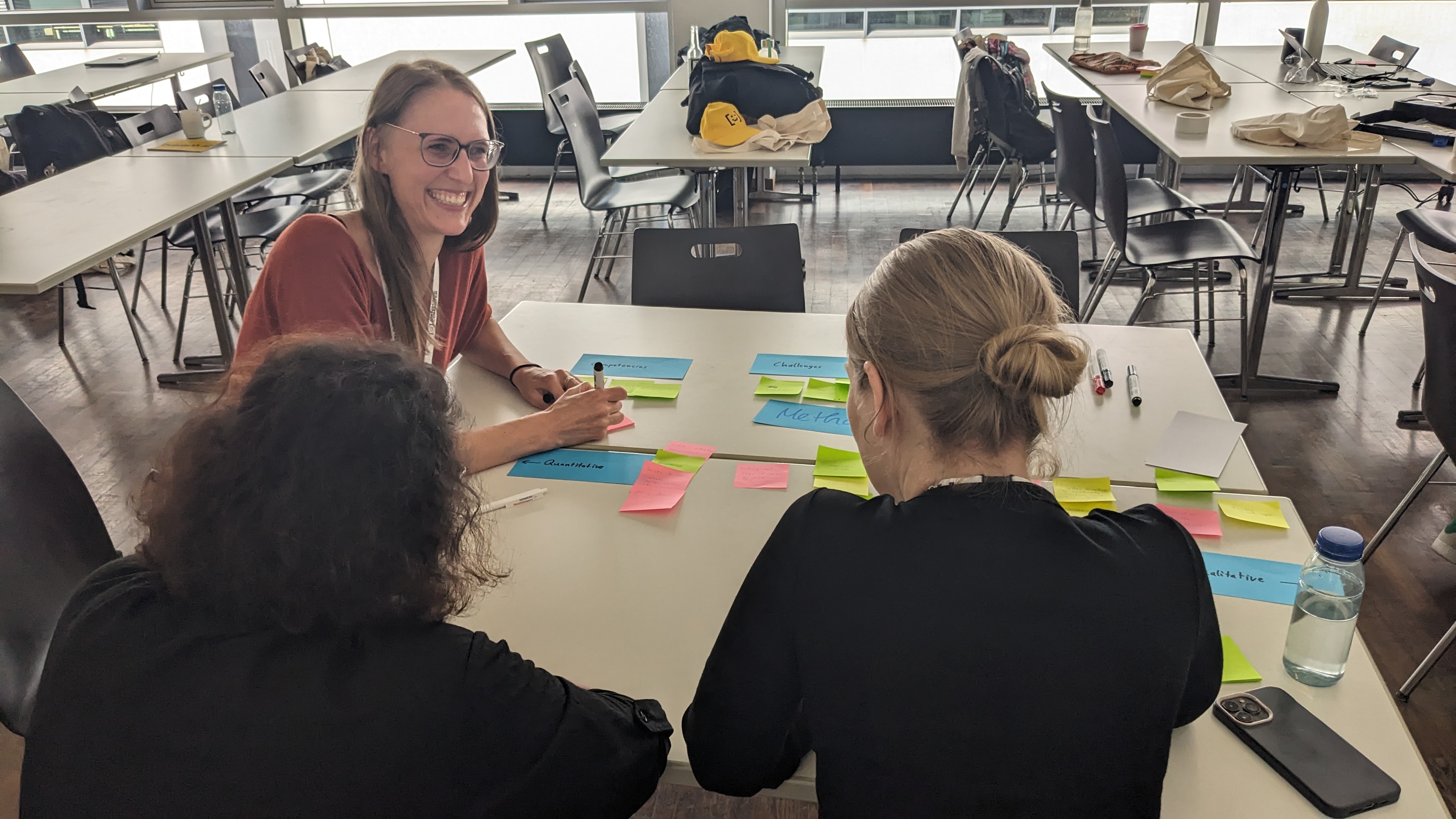
Groups reflected on the wide variety of methods in practice, ranging from qualitative (observations, diary studies) to quantitative (motion tracking, automated measurement). Much attention was given to the role of AI: how to prevent data overload given the richness of field studies, and how AI might help transform qualitative insights into more structured, quantifiable knowledge. At the same time, we raised questions about integrating AI responsibly into research processes. The session highlighted the need for open exchange about past failures and error culture, and it concluded with a call for future workshops dedicated to this topic.
Structural and Ethical Challenges
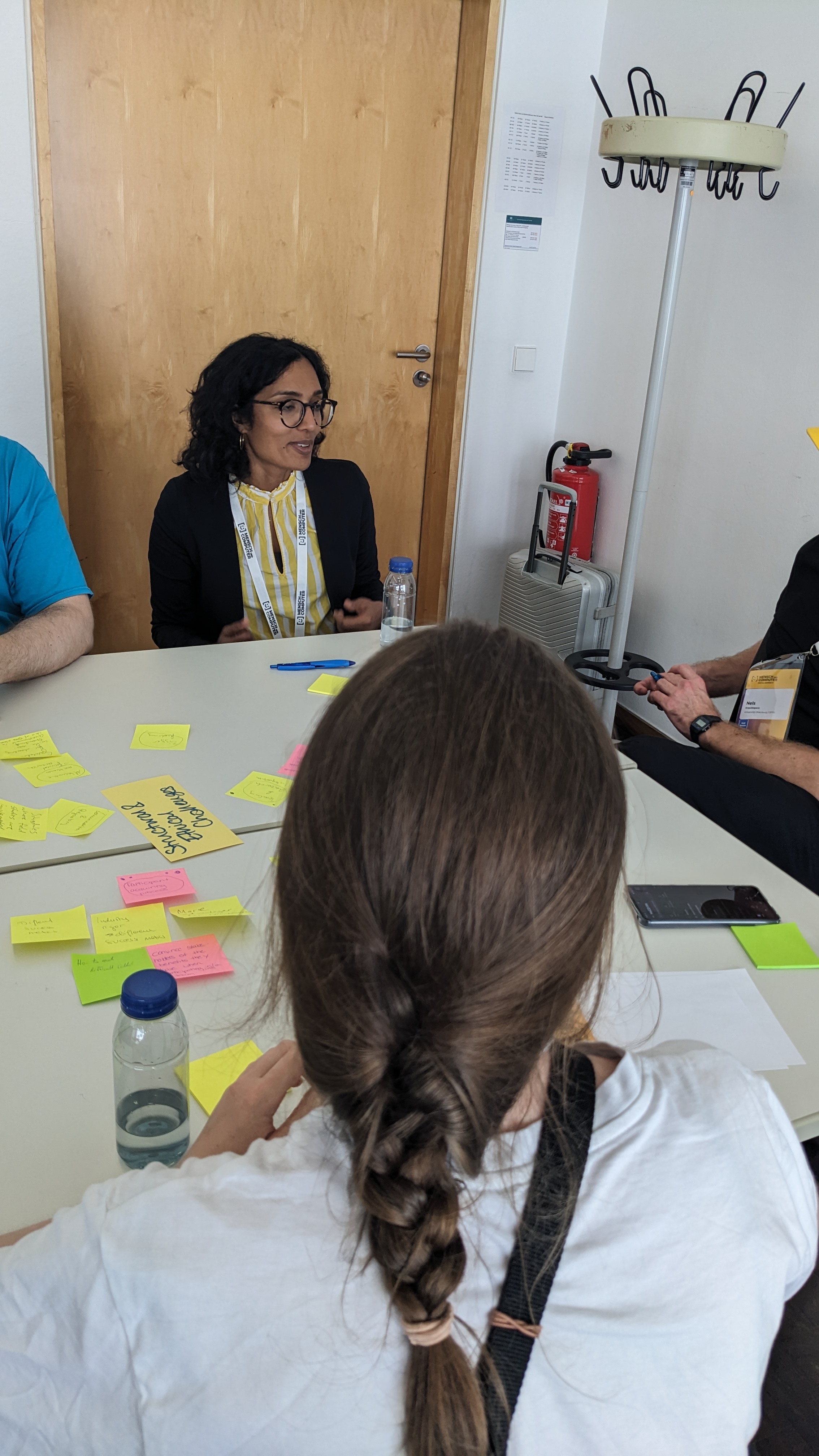
The discussion touched on broader issues in planning and using field research. Key points included: ensuring that research results “reach” participants (e.g., by integrating return mechanisms into project writing), navigating structural constraints such as funding schemes, and building visibility and networks for access to difficult fields. Another thread focused on teaching: how can students be prepared for the complexity of field research, including setbacks and failures? Initial ideas included defining failure criteria as baselines and introducing more flexible grading categories.
Outlook
We thank all participants for their contributions, presentations, and lively collaboration. The workshop highlighted the great potential of field research in HCI, as well as the many shared challenges, from field access to funding structures. Regular exchange is a valuable way to learn from one another, and we are currently exploring further opportunities for collaboration. We look forward to continuing this conversation in future settings.