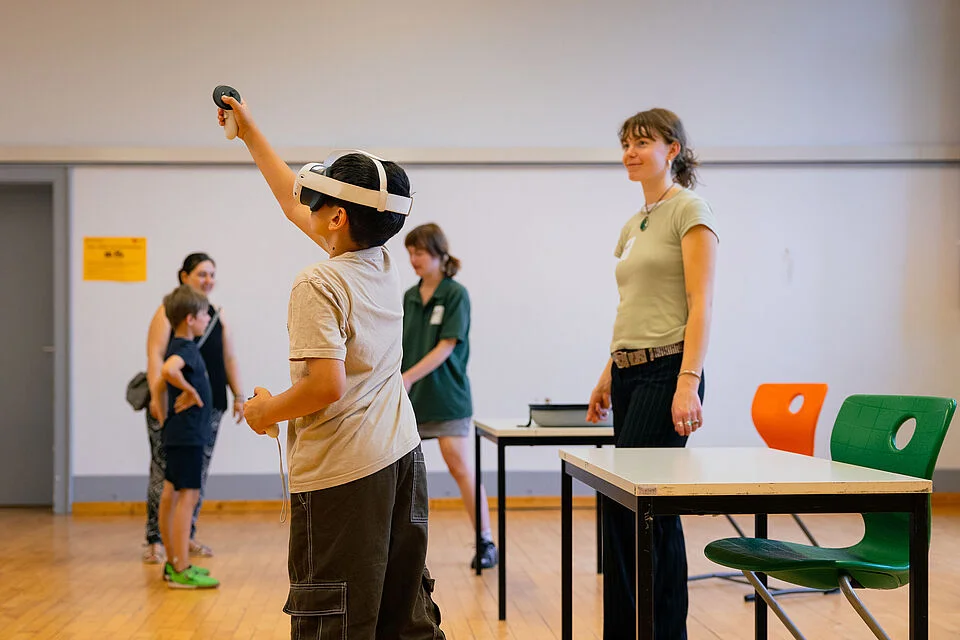
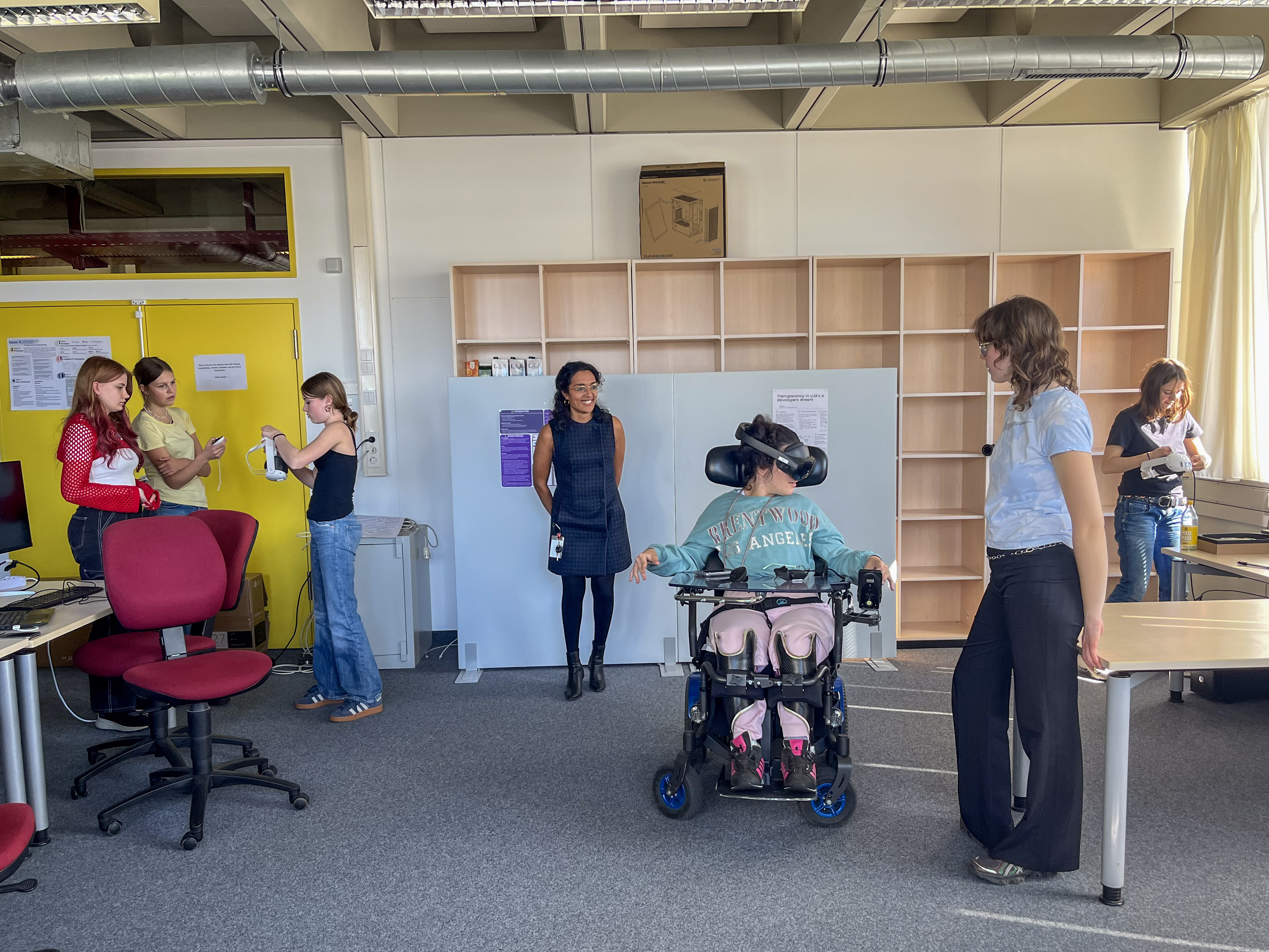
At our lab, we explore how augmented and virtual reality systems can support ongoing human learning through peripheral interaction in hybrid environments spaces where physical, 2D, and 3D digital worlds blend. Grounded in human-computer interaction, our research investigates how people engage in multitasking, multimodal experiences across devices and dimensions. We design and prototype AR and VR systems that align with the way humans naturally perceive, move, and learn supporting subtle, continuous learning that happens not just at the center of attention, but at its edges. A key focus of our work is enabling users to stay aware of what AI systems are doing even when those systems take over tasks so that users are always ready to understand, interpret, and step in when needed. We believe peripheral, embodied learning is essential to building human-AI partnerships that are transparent, trustworthy, and adaptable.
Topics include:
Peripheral Feedback for System Transparency in AR/VR Systems
Human-in-the-Loop Learning in Hybrid Immersive Environments
Seamless Transitions Between Physical and Virtual Realities
Cross-Device Interaction for Continuous Learning in Hybrid Spaces
Trust Calibration Through Peripheral Cues in VR
Usable Security and Privacy: Secondary Interactions
Democratising AR/VR Development
Accessibility for AR/VR
Get in Touch
Contact us if you would like to join us or exchange ideas!
MuC 2025 Workshop - Embedding HCI in the Real World
We invite researchers, practitioners, and academics from diverse sectors to participate in our workshop on field studies with emerging technologies in collaborative, hybrid spaces. The workshop will focus on recruitment, methodologies, challenges, regulatory considerations, and future applications in this domain. We aim to foster discussions and networking opportunities among experts and newcomers alike. The workshop will feature lightning talks, discussions, and a participatory design session to explore different perspectives on conducting field studies in collaborative work settings. Selected submissions will be presented as 5-minute lightning talks followed by 5-minute discussions.
We regularly supervise bachelor's and master's theses on topics such as
usable security, cross-reality interaction, and inclusive design. Find
out more about the process and potential topics.